Artificial intelligence is reshaping recruitment. Job seekers now use AI-powered platforms to generate resumes, tailor applications, and even prepare interview answers. On the surface, this looks efficient for both sides. Employers want faster access to talent, and applicants think AI helps them stand out.
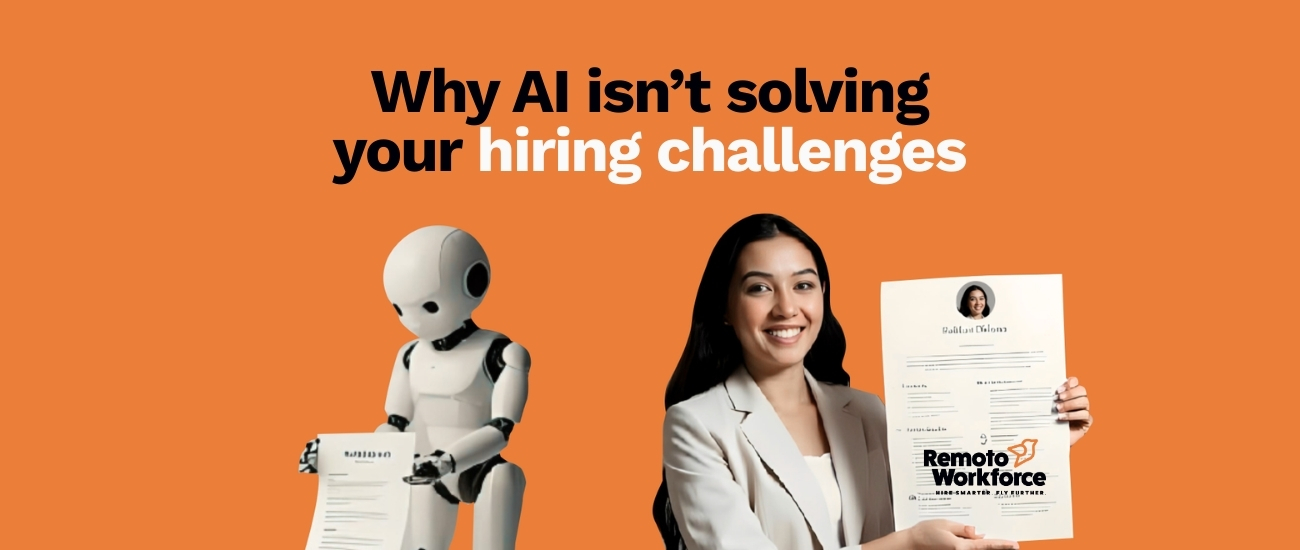
Many U.S. business owners now see that AI job search tools hurt hiring quality more than they help. Instead of bringing better candidates, AI tools flood pipelines with generic applications, weaken cultural alignment, and slow hiring managers.
To build strong teams, companies need to accept AI’s limits and use human expertise with clear hiring processes.
The AI promise vs. reality
AI job search platforms promise efficiency. They claim to reduce hiring costs, filter applications faster, and match companies with the “perfect fit.” But in practice, the outcomes are mixed.
Research has shown that AI often struggles with context, nuance, and cultural signals in applications. Algorithms scan for keywords well, but they miss human potential like problem-solving, flexibility, and teamwork. These are the traits that define high-performing teams.
Moreover, AI-generated resumes and cover letters create a flood of sameness. Hiring managers receive stacks of nearly identical applications that look polished but lack substance. Recruiters often spend extra time separating genuine resumes from those created by AI.
The problem of generic applications
For small business owners and executives with open roles, the main challenge is not getting enough applicants. The challenge is finding the right applicants. AI amplifies this problem by enabling job seekers to apply to dozens of roles with little effort.
The result is application fatigue. Recruiters, whether in agencies or in-house HR, must sort through hundreds of resumes that all look alike. This slows down the interview process and increases the risk of overlooking candidates with real talent and cultural fit.
When every resume looks the same, businesses can’t see what truly sets one applicant apart from another. Instead of surfacing quality of hire, AI tools often bury it under noise.
AI and the loss of cultural fit
One of the biggest risks of relying on AI job platforms is the erosion of cultural fit. AI can identify hard skills, degrees, and certifications. But it cannot measure how well a candidate will align with your team’s values, communication style, or long-term vision.
A company may hire someone with strong skills on paper, but that person might not fit the culture. This mismatch leads to higher turnover, lower engagement, and added costs for rehiring.
Executives seeking long-term growth know that cultural fit is as important as technical expertise. This is why working with a remote staffing agency, or global technical recruiters is more effective. Human recruiters assess not only technical skills but also personality, flexibility, and collaboration—qualities that no algorithm can fully understand.
Why ai job platforms hurt hiring quality
- Over-automation reduces trust: Applicants coached by AI tend to present answers that sound rehearsed. Managers sense they are not genuine.
- Algorithms miss potential: AI may dismiss a candidate with different experience if it does not find enough keyword matches.
- Bias is still present: Despite claims of neutrality, AI reflects the biases in its training data. This creates risks of excluding valuable talent.
- Cultural blind spots: AI cannot measure alignment with your team’s vision, which is essential for retention.
- Slower recruitment, not faster: Instead of reducing workload, AI creates new delays by generating volume over quality.
The human advantage
While AI tools focus on volume, human recruiters focus on value. Recruitment experts assess candidates beyond the resume. They identify problem-solvers, team players, and professionals who want to grow with your company.
A remote recruitment agency not only pre-vets candidates but also checks their long-term potential. Hiring managers skip the pile of generic resumes and get a focused list of candidates who match the role and the culture.
This approach accelerates hiring, reduces turnover, and strengthens performance. For U.S. business owners, it means better use of time and resources.
Nearshore talent and human recruitment
Another overlooked solution is the rise of remote talent in Latin America (LATAM). Unlike AI job platforms that generate noise, nearshore staffing agencies deliver real candidates with strong skills and cultural alignment.
Hiring professionals from Mexico, Colombia, or Brazil allows U.S. businesses to work in real time, without time zone gaps. These professionals are bilingual, affordable, and committed to long-term roles. Nearshore recruitment with human vetting helps companies avoid AI hiring risks and secure reliable, loyal employees.
How to hire better without relying on AI
- Define clear job descriptions: Avoid vague postings. Precise roles attract serious candidates.
- Work with specialized recruiters: A remote job staffing agency can identify candidates that match both skills and culture.
- Use structured interviews: Instead of relying on AI screening, human-led interviews test resilience, communication, and motivation.
- Prioritize long-term alignment: Focus on quality of hire and retention rather than fast placements.
- Leverage global talent pools: Human recruiters can find talent in markets where AI platforms cannot add value.
Why business owners are shifting back to human recruitment
Many U.S. companies that experimented with AI job platforms are returning to traditional, human-centered recruitment strategies. Leaders recognize that the best employees are not those who generate the most optimized resume. They are those who can integrate, adapt, and contribute to team growth.
Studies have shown that blending technology with human oversight leads to better outcomes. Tools can support efficiency, but they cannot replace the human ability to assess nuance, personality, and cultural fit.
Many leaders also realize that relying too much on AI damages their brand reputation in the talent market. Candidates who feel reduced to algorithm scores often share negative experiences online, discouraging future applicants. When companies return to human-centered recruitment, they respect people, earn applicant trust, and strengthen their employer brand. This helps attract better talent and keep them longer because people want a hiring process that treats them like humans.
The future of recruitment: balance, not blind automation
The future of recruitment is not about removing AI. Instead, it is about balancing automation with human expertise. Businesses can use AI for administrative tasks, like scheduling interviews or checking credentials. But to selecting the right people, human judgment remains essential.
Companies that understand this balance will not only hire faster but also grow smarter. They will avoid the trap of over-automation and instead build strong, connected teams.
Key takeaways
- AI job search tools add more applications but rarely improve hiring quality.
- They reduce genuineness in resumes and ignore cultural fit.
- For U.S. business owners, this means slower processes, weaker hires, and higher turnover.
- A remote recruitment or staffing agency connects businesses with global technical recruiters who focus on people, culture, and growth.
- Nearshore markets like LATAM offer skilled, bilingual professionals aligned with U.S. standards.
The future of hiring is not blind automation but smart integration—using AI where it helps, and people where it matters most.
Book a Call with Remoto Workforce today to connect with the right talent through our human-driven recruitment process.
Related Posts at Remoto Workforce US & Canada:
-

If you want to find new workers quickly, you should utilize the best job search websites. We share with you our list of the best…
-
Hire someone from Upwork for your next job or to create a product for you to sell.. or anything else. In this video, I'll show…
-
Freshers are an available workforce waiting for an opportunity. See how can positively contribute to your business.
-
Marketing Job Interview Tips - With the help of two of our experienced recruitment consultants, Dominic Phipps and Chloe Manchett, we’ve put together a helpful…
-
How To Hire Freelancers on Upwork? Have you used UpWork or Elance to find freelancers to do some projects for you just to be disappointed…
-
Google is one of the most important sourcing tools for candidates. Learn how to use the Boolean search to attract new talent for your company.
-
Overcome the challenges and discover effective strategies to boost economic recovery and job creation after job cuts.
-
Job ads are important for many reasons. Do you want to enhance your recruiting? Read this job checklist and take your recruitment to the highest…
-
I tried to hire a freelance both on Fiverr and Upwork. In the ends, I found out which one Is better. Is it Fiverr or…
-
Brand Designer vs Graphic Designer: What's the Difference? If you're looking to create a new logo or brand identity for your business, you…
-
How To Hire A Virtual Assistant On Upwork 🔥 DOWNLOAD THIS FREE APPOINTMENT SCRIPT!! / ✅ INTERESTED IN 1-ON-1 COACHING? GET STARTED HERE 👇…
-
Freelancing allows you to grow and expand at your own pace. You get to decide what type of work you want to do and…